
Digital transformation with the Eximee
low-code development platform



How does Eximee support digital transformation in banks?
The Eximee low-code platform offers the tools and resources for developing applications and modernizing legacy systems to accelerate digital transformation in banks of all types.
Accelerate digital transformation with Eximee low-code platform
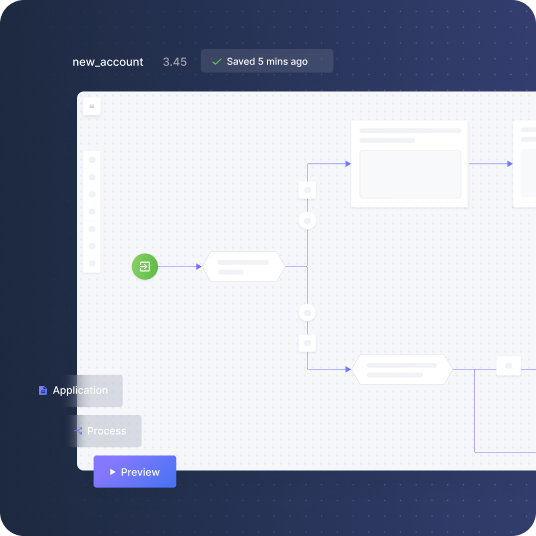
Business process mapping and automation
thanks to a visual workflow editor for designing and launching processes and seamless integrations
Omnichannel processes
thanks to easy and secure integration of existing channels, e.g., desktop, mobile, in-branch and call center applications
Developing business apps
thanks to ready-made process templates as well as graphical, business and integration components
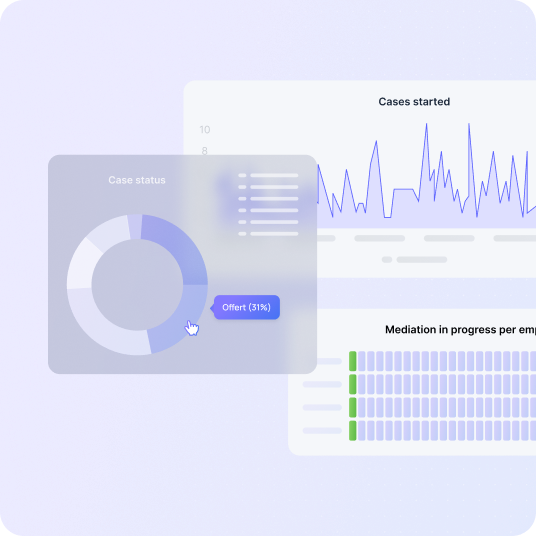
Process monitoring
thanks to statistics and the possibility of checking the statuses of ongoing cases
Building digital forms
thanks to an intelligent form builder that enables the design of a consistent user experience regardless of a channel
Case management
thanks to an extensive and configurable application for user tasks management and execution
Future-proof digital customer experience

Flexibility and speed
Eximee low-code development platform enables the adaptation to dynamic market changes and user expectations. Reusable components and rapid development empower banks to quickly design, test, and deliver new business models and ideas.

Innovativeness
Eximee low-code streamlines digital transformation by enabling a visual approach to development and involving business analysts, researchers, trendwatchers, and other non-technical specialists in creating innovative solutions.

Legacy systems modernization
Build open and extensible applications that integrate with the existing systems and services to modernize outdated elements and transform your technological landscape incrementally.


The ready-made solution, i.e., the Eximee platform – was practically at our fingertips, and all we had to do was reach out for it. We have used Eximee to launch loan application forms integrated with e-commerce, an entirely online cash loan in mobile and desktop versions, as well as several smaller applications, such as a contact request form and an account transfer application form.
Tomasz Hajdasz
Software Development Manager, Credit Agricole
FAQ
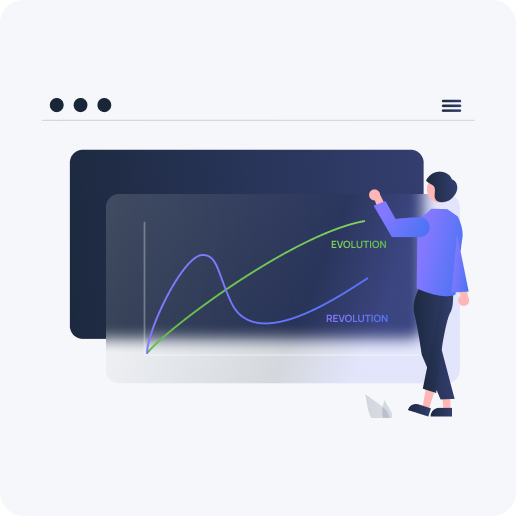
Eximee promotes an evolutionary approach to digital transformation, focusing on optimizing operations and delivering immediate value to customers. Instead of high-risk revolutions, the platform enables banks to secure “quick wins” by digitizing key sales and self-service processes first, ensuring a steady and secure transition.
The platform facilitates better collaboration by helping IT departments understand complex business requirements while empowering non-technical team members to design, develop, and modify digital processes. This democratization of development through low-code tools accelerates the transformation cycle and reduces the burden on traditional IT resources.
Eximee enables banks to modernize their technological landscape incrementally by building open and extensible applications that integrate seamlessly with existing legacy systems. This approach allows for the modernization of outdated elements without the need for a complete system overhaul, reducing both risk and cost.
Efficiency is driven by a suite of specialized tools, including a visual workflow editor for process mapping, an intelligent form builder for consistent cross-channel UX, and comprehensive process monitoring with real-time statistics for case management. These features allow banks to quickly test and deliver new business models.
Eximee ensures a future-proof customer experience by providing secure and easy integration across all service channels, including desktop, mobile, in-branch, and call center applications. This ensures that digital processes are consistent and accessible, regardless of how the customer chooses to interact with the bank.
3-step implementation of the Eximee
low-code platform
How to implement Eximee in a bank?

Step 1
Discovery meeting
We discuss the current state of your processes, digitization and automation capabilities, and possible solutions.
Step 2
Analysis
Together we choose the process to digitize and develop a plan.